CN
CN

Amid booming performance‑rental, theatre and cultural‑tourism sectors, beam lights and profile spot lights are two core moving‑head categories frequently mis‑selected by practitioners. This article analyzes their positioning from optical structure, on‑site output and project adaptability, delivering practical references for lighting designers, system integrators and rental houses to achieve more reasonable stage‑lighting configuration.
Global live‑event markets are seeing growing demand for concerts, theatre plays, corporate galas and outdoor cultural‑tourism shows, which drives rising procurement and rental volumes of intelligent moving‑head fixtures. Many project teams mix‑up beam lights and profile spot lights at the design phase, resulting in unsatisfactory visual output or wasted budget. Drawing from abundant global project cases, XMLITE clarifies technical logics and application scenarios of these two mainstream fixture types from real‑world industry perspective.
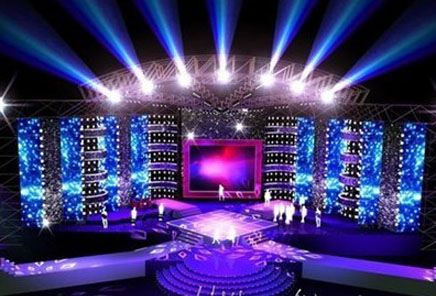
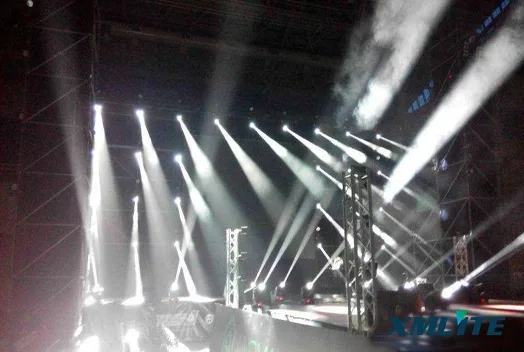
Optically, beam lights are engineered to generate sharp aerial light shafts. Their optical system compresses beam angles to a narrow range of 2‑7 degrees, delivering high‑penetration luminous output. With haze or smoke, they produce solid‑looking, dynamic aerial beam visuals. Fast pan‑tilt mechanics support rapid directional sweeping and beam‑array effects. Nevertheless, constrained by optical design, beam lights deliver poor detailed imaging and flat‑surface illumination for performers or objects. Their visual power heavily relies on atmospheric haze; performance drops sharply without smoke machines.
Profile spot lights (gobo spot lights) are built for surface projection. Equipped with gobo wheels, motorized zoom, CMY colour‑mixing system and framing shutters, these fixtures project graphics onto surfaces. Metal gobos deliver basic geometric shapes, while glass gobos reproduce fine logos, texts and photographic patterns. Zoom adjusts projected image size, and framing shutters cut light into squares or polygons. No haze is required. They are widely used for actor highlighting, brand‑logo projection and narrative lighting in theatre. Typical beam‑angle coverage ranges from 8° to 50°, prioritizing sharp projected images rather than aerial light beams.
Neither fixture type is universally superior; they are functionally complementary. Beam lights deliver explosive dynamic atmosphere for music festivals and clubs. Profile spot lights handle visual storytelling for theatre, corporate events, weddings, product showcases and architectural projection. Large‑scale professional productions usually deploy both: beam lights build energy‑driven atmosphere, while profile spot lights handle fine‑detail storytelling to achieve multi‑layer lighting visuals.
Many all‑in‑one BSW moving‑heads integrate beam and spot functions within one unit. However optical compromises mean combined performance falls behind dedicated beam‑only or spot‑only fixtures. High‑end touring productions still prefer dedicated units. All‑in‑one fixtures remain cost‑effective for small‑to‑mid‑budget events.
XMLITE engineering team advises practitioners to evaluate four key factors before selection: event nature, permission for smoke/haze, throw distance and project budget. Common project mistakes happen when designers copy reference renderings without checking venue constraints. For broadcast studios where smoke is forbidden, over‑specifying beam lights yields little visual payoff; profile spot lights should take larger share in such rigs.
Driven by continuous LED upgrades, modern beam and profile fixtures keep improving luminous efficiency, thermal management, CMY colour accuracy and IP‑rated outdoor protection. Demand for waterproof variants is rising fast within cultural‑tourism projects. Lighting designers, integrators and rental operators who fully understand the optical nature of both fixture types can reduce design errors and raise overall project delivery quality.