VR
VR 中文
中文 ENGLISH

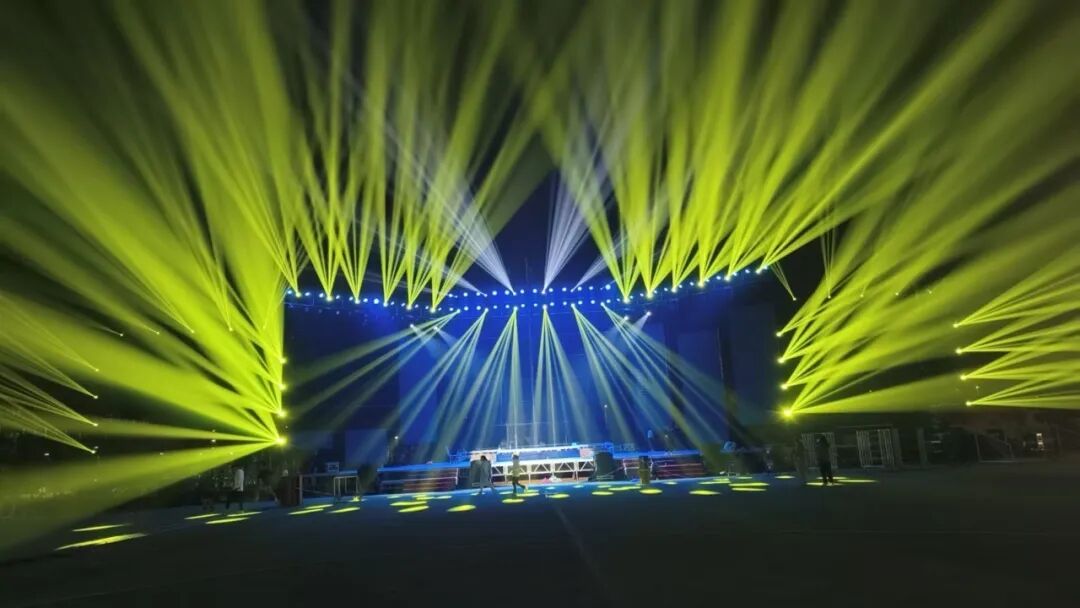
Since their inception, beam moving head lights have consistently been a highly regarded product in the stage and entertainment market. Their core advantages lie in high brightness, cost-effectiveness, and compact structure, making them an indispensable tool for various lighting shows. Although LED and laser light sources are gradually entering the market, short-arc gas discharge lamps maintain a solid position as the performance benchmark in the field of beam lights: LEDs can achieve relatively high luminous flux but struggle to match the central illuminance of gas light sources; lasers perform well in terms of illuminance, yet their costs remain high, making large-scale replacement difficult in the short term.
Although the overall market for gas light sources is contracting, OSRAM continues to invest in research and development and has built a comprehensive product matrix of moving head light sources covering LED modules and laser light sources. In 2025, OSRAM's special lighting division was acquired by the Japanese company Ushio, further confirming the long-term value of this technology in the capital market.
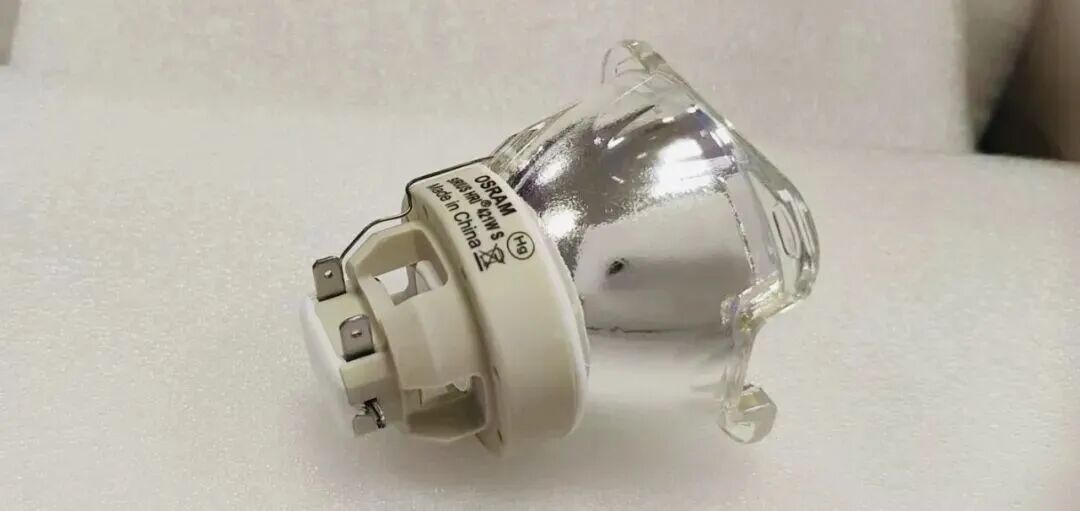
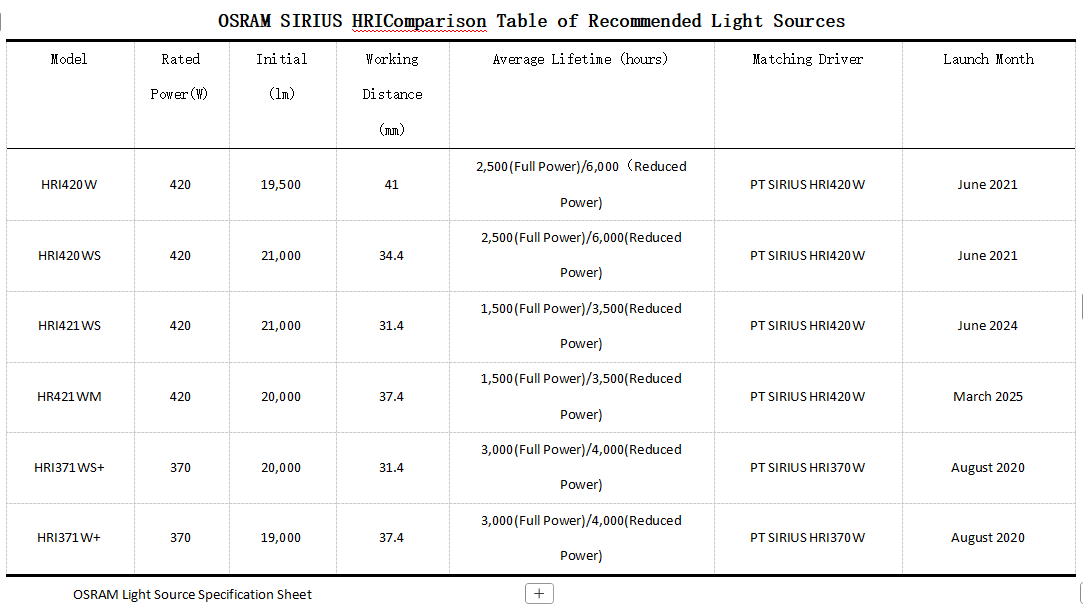
This article focuses on the short-arc gas discharge lamps of OSRAM's current mainstream SIRIUS HRI series beam moving head lights. Through key parameter comparisons and optical characteristic analysis, it systematically outlines the core differences among various models in terms of brightness, lifespan, and optical compatibility. The aim is to provide clear and practical technical references for luminaire selection and optical design. The comparison reveals that although they are both nominally 420W bulb light sources, the "420" and "421" series actually belong to different product tiers.
(1) Optical characteristics and working distance analysis
The six OSRAM SIRIUS HRI series light sources compared this time all have a stable color temperature around 7,700K, presenting a bright, clear high-color-temperature cool white light, making them very suitable for stage and entertainment lighting.
Working distance is the core parameter determining the matching degree of the optical system:
Short focal length models (with "S" suffix): Working distance is 31.4mm or 34.4mm. The short focal length and concentrated light efficiency can achieve higher central illuminance, making them the ideal choice for pure beam lights pursuing extreme beam brightness.
Standard focal length models: Working distance is 37.4mm or 41.0mm. The longer optical path provides physical space for integrating gobo wheels and CMY color mixing systems inside the luminaire. Therefore, they are mainly used in multifunctional luminaires that combine beam, pattern, and wash functions, ensuring light efficiency while also considering spot uniformity.
General rule: Under the same nominal power, the shorter the focal length, the higher the luminous flux output typically is.
(2) Key concept explanation: Full power and reduced power (ECO mode)
To accurately understand the lifespan data, the following operating modes need to be clarified:
Full power mode: Refers to the light source operating continuously at its rated power (e.g., 420W). This data reflects the baseline lifespan of the light source under maximum performance output.
Reduced power mode (ECO mode): Refers to adjusting the light source power to approximately 70% of the rated power (e.g., reducing from 420W to 294W) through the driver. This mode is not only an energy-saving method; its core value lies in active electrode repair and maintenance. If an extreme reduced power setting significantly lower than the standard ECO mode (approximately 70%) is needed (such as the commonly referred to 40% "sleep" mode), also known as the ED mode (Extreme Dimming), it should be considered a custom waveform. It is essential to consult with OSRAM technical support in advance. The ED mode has been successfully implemented in the 420 series, while it is still under development for the 421 and 371+ series.
Technical value: During reduced power operation, the lamp electrodes are in a "repair" state, effectively slowing material consumption and bulb blackening. Therefore, enabling ECO mode during performance intervals or when the luminaire is dark and on standby is an intelligent lifespan management strategy that can significantly extend total lifespan and reduce lumen depreciation.
(3)Product Positioning and Selection Strategy
Based on the above parameters, the positioning of each series is clear:
SIRIUS HRI420W Series
Positioning:High-end performance flagship.
Features:Represented by the 420WS model, it boasts the series' highest luminous flux of 21,000 lm. Furthermore, in reduced power mode, its lifespan can reach 6,000 hours, achieving a perfect balance between top-tier brightness and ultra-long durability.
SIRIUS HRI371W Series
Positioning:High cost-effectiveness option, classic model.
Features:In reduced power mode, its lifespan can reach 4,000 hours, making it economical and practical.
SIRIUS HRI421W Series
Positioning:Seamless compatibility upgrade solution.
Features:Its optical design is fully compatible with the 371W series (S version corresponds to S+ version, M version corresponds to + version), with power increased to 420W and luminous flux significantly improved. It is suitable for upgrade and replacement scenarios where minimal luminaire modification and rapid performance enhancement are desired.