CN
CN

With the continuous recovery of cultural tourism performances, corporate galas, commercial exhibitions, and theater dramas in recent years, stage lighting serves as the core equipment for creating scene atmospheres and presenting visual effects. The professionalism of lighting selection directly affects the on-site presentation of events and budget utilization efficiency. Industry surveys show that most small and medium-sized event organizers, venue operators, and performance production teams commonly face problems such as homogenized lighting selection, low scenario adaptability, incompatible control systems, and unnecessary budget waste. Differentiated lighting selection standards for diverse event scenarios have become a core practical demand in the stage lighting industry. Combining practical industry experience, this article systematically sorts out scenario-based lighting selection logic, core evaluation criteria, and customized solutions, providing professional references for industry practitioners.
1. Scenario-Based Lighting Matching: Exclusive Configuration Standards for Various Events
The core principle of stage lighting selection is “scenario adaptation, precise effect, and functional matching”, rather than blindly pursuing high power and diversified equipment. Event scenarios differ greatly in atmospheric requirements, shooting adaptability, and venue conditions, and customized lighting configurations can maximize equipment value.
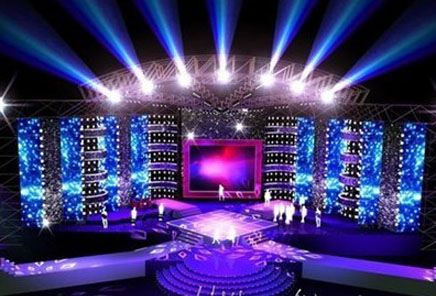
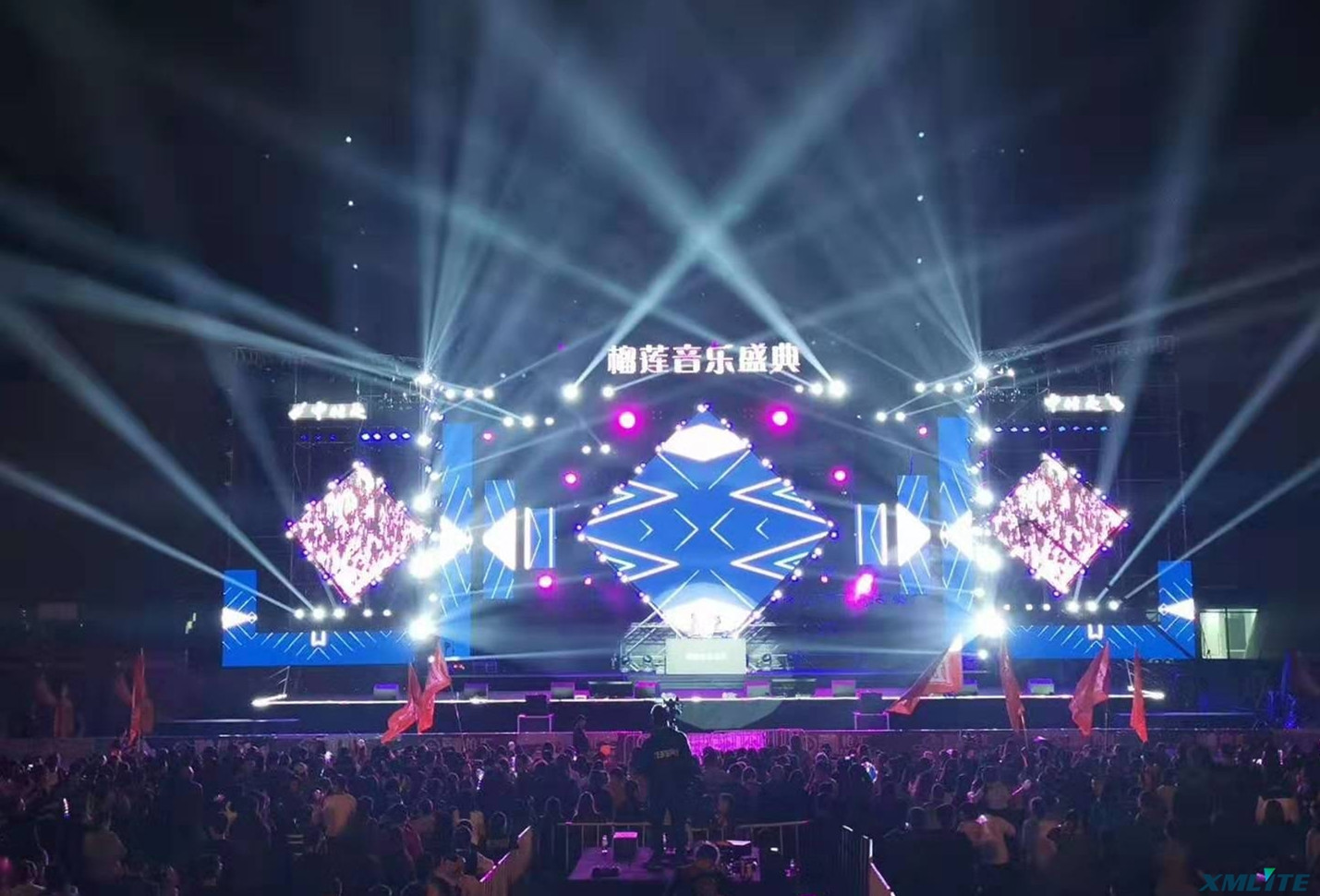
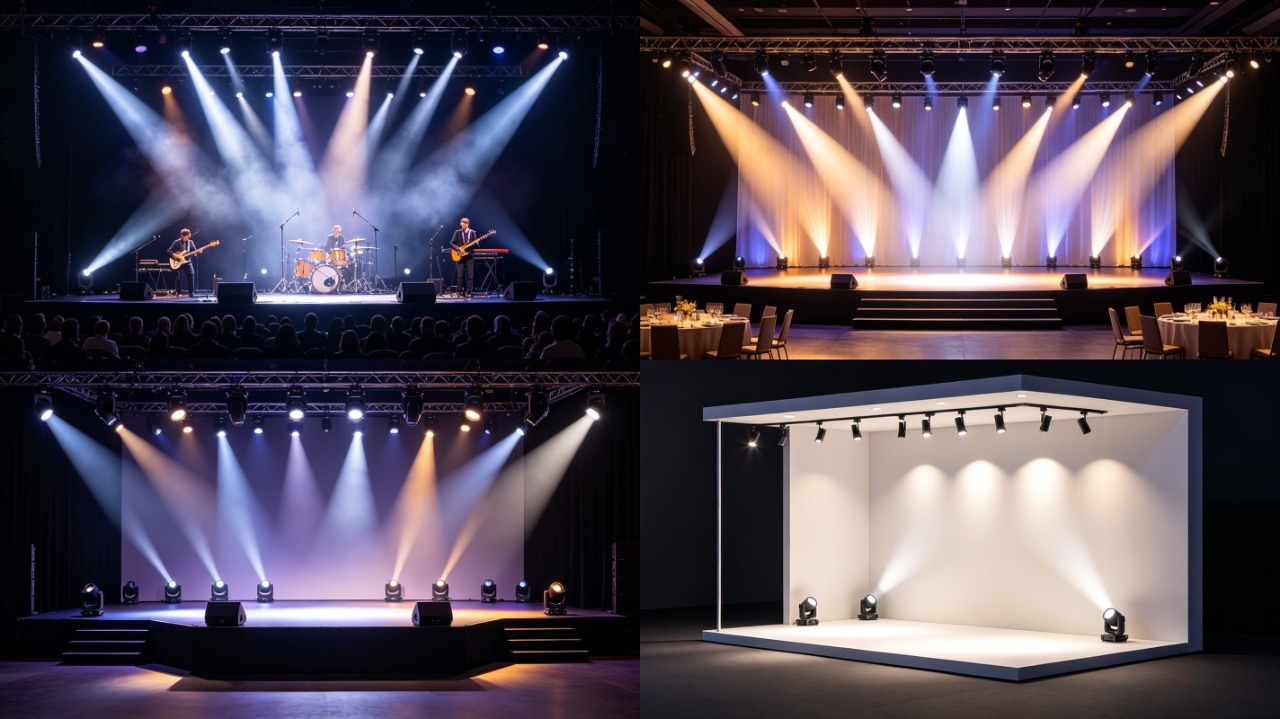
For dynamic performances such as music concerts and outdoor music festivals that require highly vivid visual effects, high-output moving head spotlights, beam lights, strobe lights, and LED video panels are the mainstream choices. Supported by standardized DMX control systems, these devices realize linked lighting programming, adapt to fast-paced stage atmospheres, and meet long-distance lighting demands for large venues.
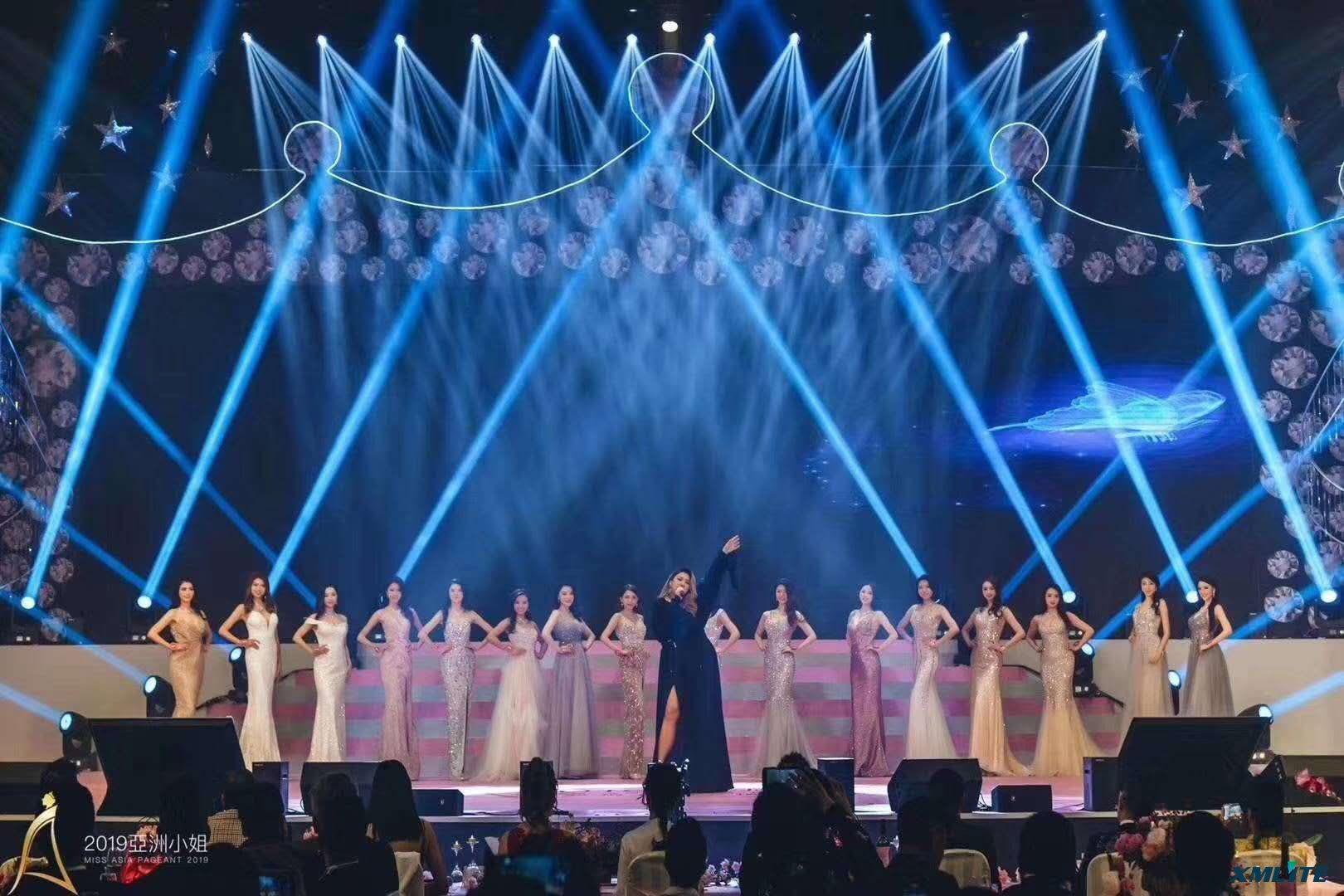
Corporate annual meetings, commercial galas, and high-end dinner parties focus on formal and business-style atmospheres. LED PAR lights are adopted for basic ambient uplighting, profile spotlights for speaker and character focusing, and soft wash fixtures for venue beautification. The color temperature can be adjusted as needed: 5000K-6000K cool white light suits formal business scenarios, while 3200K warm yellow light creates a soft and elegant gala atmosphere, balancing on-site viewing experience and live streaming image quality.
Theater plays and stage dramas demand extremely high lighting accuracy. The industry standard configuration includes profile spotlights, Fresnel lights, and dimming equipment, which can precisely adjust light brightness and coverage range. Fast strobing and drastic shaking lighting effects are avoided to ensure stable stage narration and immersive performance presentation.
Commercial exhibition booths focus on highlighting exhibits with concise and elegant visual effects, making basic profile lights, LED wall washers, and track lights the optimal options. For outdoor exhibitions, it is essential to prioritize equipment IP protection levels, and IP65 dustproof and waterproof stage lights are highly recommended to adapt to complex outdoor environments.
2. Industry Standard 5-Step Lighting Selection Method to Avoid Procurement and Operation Errors
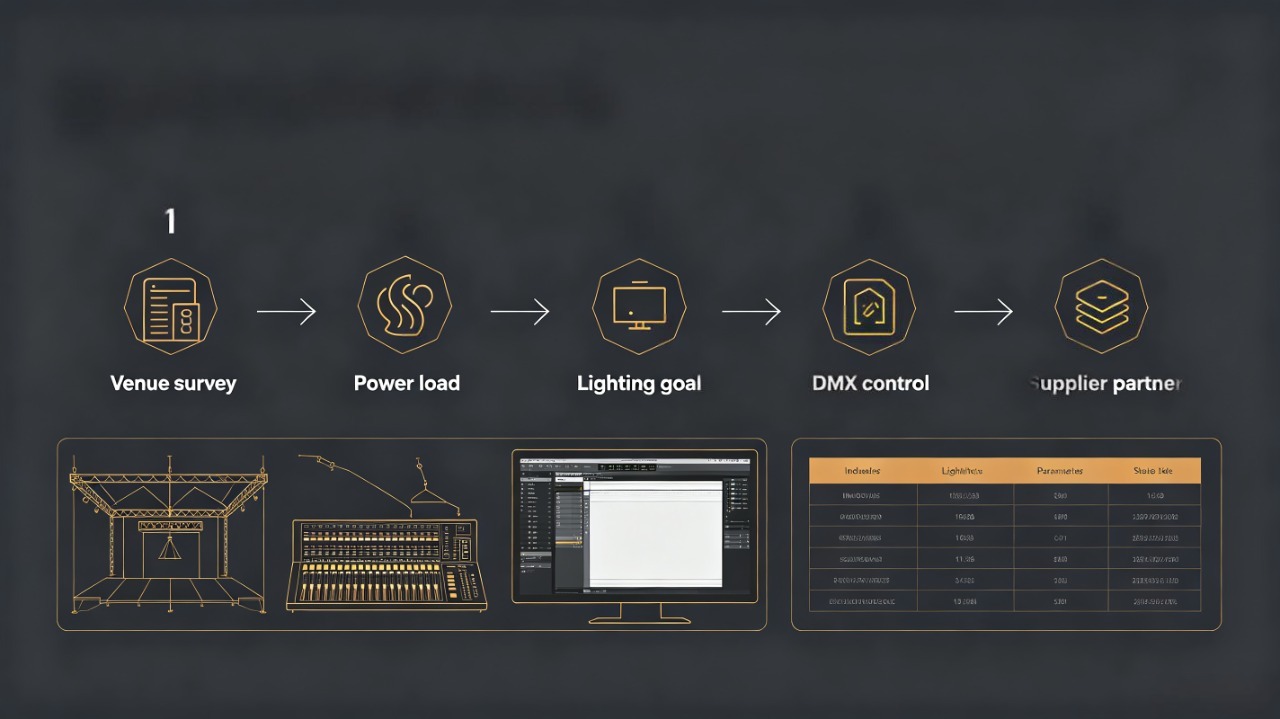
To solve common industry pain points including blind procurement, equipment idleness, and on-site operation failures, a standardized five-step selection process has been widely adopted in the industry. It covers venue survey, demand positioning, budget planning, system compatibility verification, and supplier screening, suitable for large, medium and small-scale performance projects.
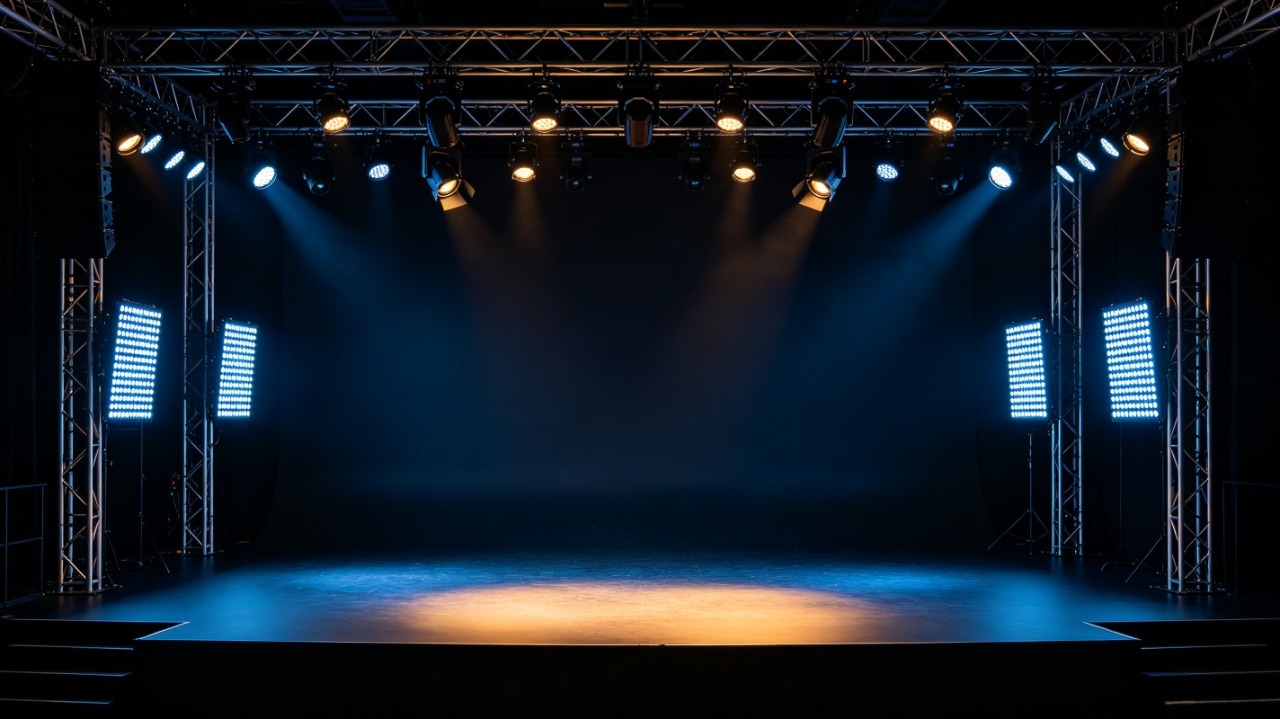
First, survey venue space and power conditions accurately. Lighting projection distance determines the required equipment brightness parameters. Longer projection distances demand higher lumen and lux values, effectively solving the problem of dim on-site images caused by low-power lights working over long distances. Meanwhile, strictly check the venue’s power load. Energy-saving LED lights are preferred to match the power standards of old and medium-sized venues and avoid tripping and equipment failures.
Second, clarify the core visual goals of the event. Distinguish core demands including ambient lighting, precise focusing, and special effect rendering, and reasonably allocate the quantity of wash lights, spotlights and effect lights. Concerts prioritize dynamic special effect lighting, while business events focus on soft and accurate fixed-point lighting to eliminate mismatches between equipment functions and scenario demands.
Third, formulate long-term procurement plans based on budgets. As stage lighting belongs to fixed-asset equipment, practitioners can choose brand-new equipment or officially certified equipment according to service frequency. Brand-new equipment is ideal for long-term frequent touring and fixed venue use, with complete warranty and customized services. Officially certified equipment undergoes full-machine testing and parameter calibration, delivering performance close to new products with higher cost performance, suitable for short-term projects with limited budgets.
Fourth, strictly verify control system compatibility. High-quality lighting equipment cannot deliver value without compatible control systems. Ensure all devices support standard DMX consoles. Large-scale special effect performances can be equipped with media servers to realize integrated linkage of lighting, video and special effects, solving the common industry problem of “usable but uncontrollable equipment”.
Finally, select professional and reliable cooperative service providers. A qualified supplier provides more than simple equipment sales, but also full-process technical support. Reliable manufacturers have independent production capacity, standardized equipment testing procedures, sufficient spare parts inventory and professional technical teams, ensuring stable project operation and timely troubleshooting during performances.
3. Non-Standard Custom Solutions to Fill Industry Scenario Gaps
With the diversification of event scenarios, standard off-the-shelf lighting equipment can no longer meet the demands of customized projects. Scenarios such as outdoor harsh environment operations, brand-exclusive visual effects, and special venue lighting require personalized lighting modification and customized services.
Professional stage lighting manufacturers rely on in-house engineering teams to provide all-round customized solutions, including beam angle adjustment, DMX program modification, custom gobos, and waterproof and moisture-proof housing optimization. For extreme venues and special performance requirements, brand-new customized lighting equipment can be independently developed to solve the industry pain point of poor adaptability of standard products.
4. Industry Summary
Stage lighting selection is a systematic work combining professional technology and creative design. Its core lies in scenario adaptation, accurate parameter matching and system compatibility. Practitioners should abandon the blind stacking procurement mindset and follow standardized selection processes. Adopting standard equipment or customized solutions according to actual scenario demands can effectively control project budgets, maximize stage visual effects, meet the lighting landing needs of various commercial performances, cultural and sports activities, and commercial scenarios, and promote the standardized and refined development of the stage lighting industry.