CN


Stage lighting shapes the atmosphere of performances, yet venue environments determine which lighting fixtures can deliver stable and stunning visuals. Lighting designers and project integrators need to fully understand the differences between indoor and outdoor stage lights before fixture selection.
Many live production teams make a common mistake: directly deploying indoor lighting fixtures for outdoor performances. Simple protective covers cannot solve the fundamental technical gaps between indoor and outdoor lighting systems. This guide compares the core differences between indoor and outdoor stage lighting, helping you pick suitable lighting equipment for different venue conditions.
1. Protection Grade & Environmental Adaptability
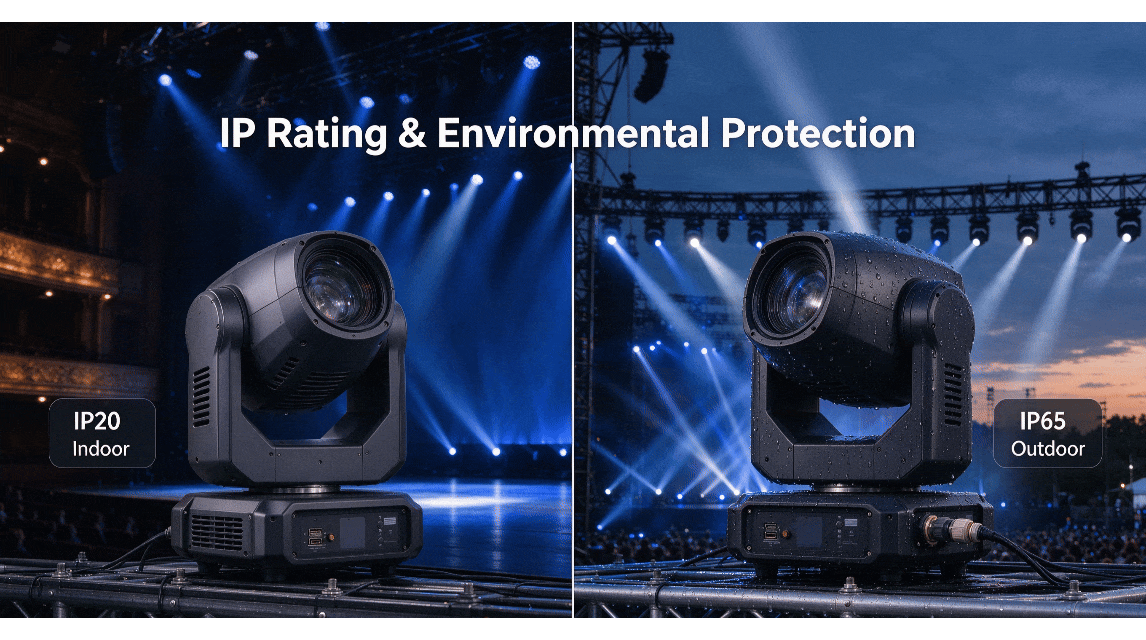
The core distinction between indoor and outdoor stage lights lies in environmental resistance. Indoor venues such as theatres, banquet halls and exhibition halls have stable temperature and no rain exposure. IP20 fixtures are widely used here. They adopt open ventilation design to realize efficient heat dissipation and quieter operation. Dust accumulation is controllable under regular indoor cleaning.
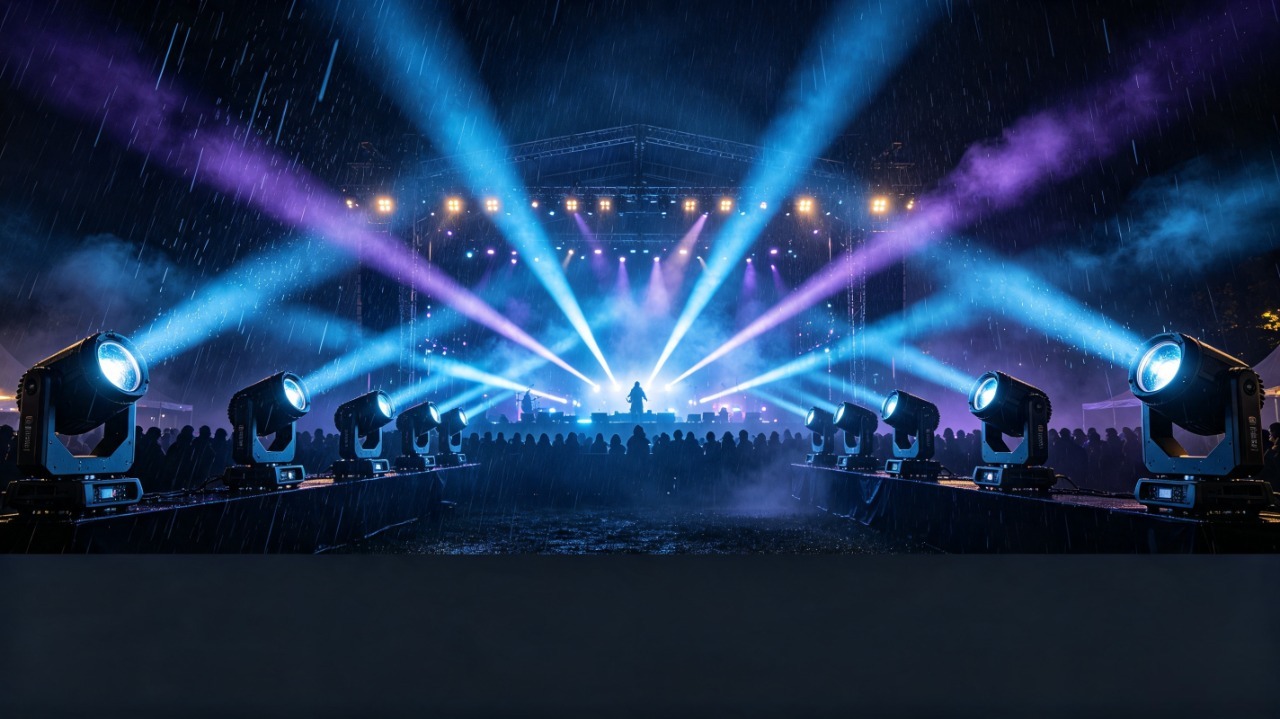
Outdoor scenes including music festivals, beach events and architectural lighting face complex environmental interference: rain, high humidity, sand dust and temperature fluctuation. Plastic rain covers are only temporary makeshift solutions. They trap heat inside the fixture and accelerate the aging of light sources. The transparent cover will also reduce brightness and distort light beam shapes, while extra installation and storage work adds workload for crews.
Professional outdoor stage lights adopt IP65 full sealed structure. With rubber gaskets, potting electronic components and anti-corrosion coating, the fixtures can block dust and resist water jet splash. It maintains stable operation under humid and dusty outdoor conditions without extra external protective covers.
2. Optical Performance & Brightness Requirements
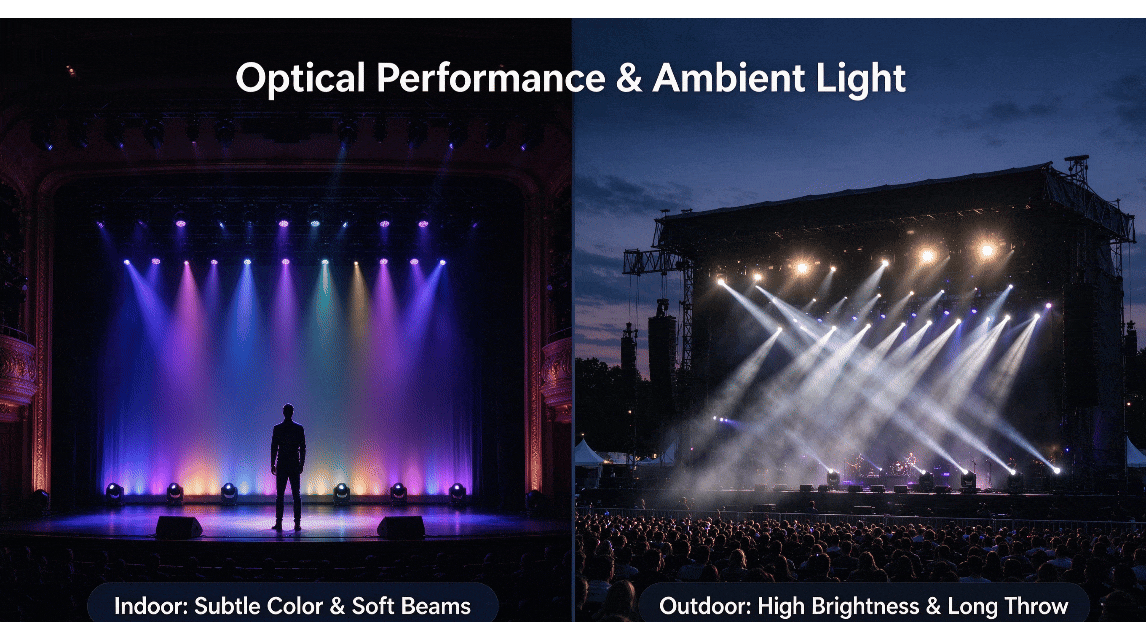
Ambient light level completely changes the optical requirement for lighting fixtures. Indoor venues can be darkened fully. The priority of indoor lighting is delicate color presentation. High CRI fixtures restore natural skin tone of performers, supporting soft color gradient and smooth pattern projection for theatre and corporate shows.
Outdoor events have unavoidable ambient light: twilight, street light and moonlight. Standard indoor lights will appear dim and ineffective under these conditions. Outdoor stage lighting requires high luminous output to cut through ambient light and atmospheric haze. Narrow beam angles are essential for outdoor aerial effects. High-power beam or hybrid fixtures can form long-distance light beams that stand out in open spaces.
3. Power Supply & Signal Connection Safety
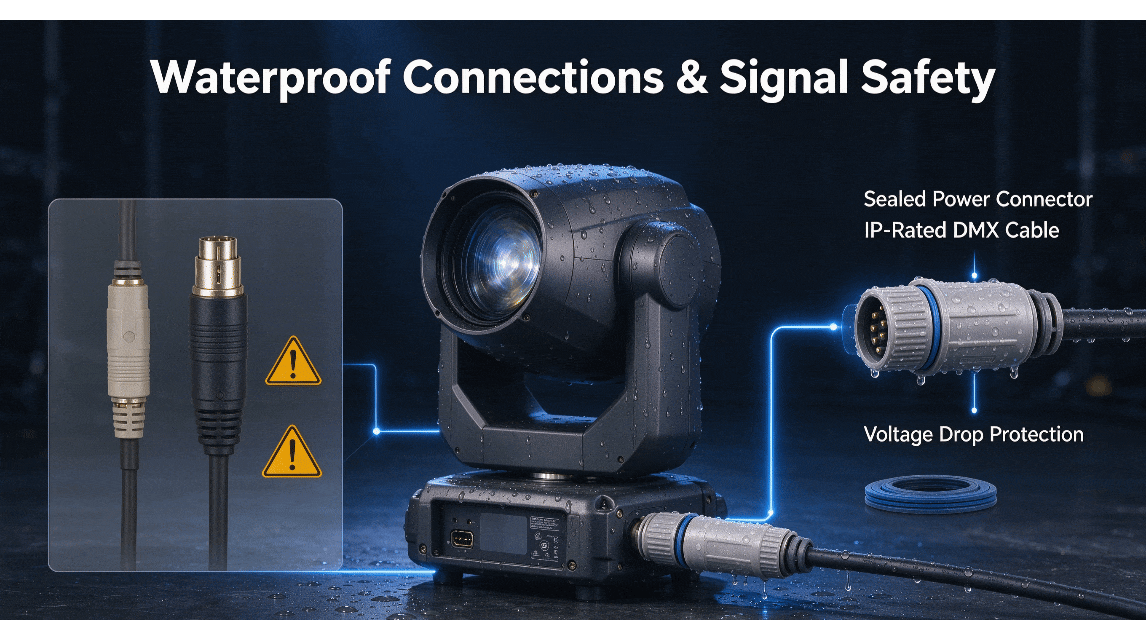
Electrical safety becomes much more critical in outdoor wet environments. Standard indoor fixtures commonly use ordinary PowerCon and 3-pin XLR connectors, which are designed for dry environments. Once water permeates the connection points, signal failure or electric safety hazards may occur.
Professional outdoor lighting systems adopt waterproof connection solutions: sealed True1 style power connectors and IP-rated DMX signal cables. The whole signal chain must keep consistent waterproof performance. Besides, long-distance wiring on large outdoor sites needs thicker cables to avoid voltage drop and guarantee stable power supply for all fixtures.
4. Heat Dissipation Design & Long-term Operation
Cooling design varies greatly for indoor and outdoor lights, which affects long-term stable running. IP20 indoor moving heads rely on air convection cooling. Fans draw surrounding air into the fixture. Dust, confetti and haze residue will accumulate on lenses and internal parts over time, requiring regular disassembly, cleaning and maintenance.
IP65 outdoor sealed fixtures mostly use passive heat dissipation with metal heat sink or isolated independent cooling system. The sealed shell prevents dust and haze residue from entering the optical chamber. It reduces the frequency of cleaning and maintenance, keeping optical performance consistent during long continuous operation.
5. Mechanical Structure & Anti-wind Performance
Outdoor lighting fixtures need stronger mechanical structure to resist wind impact. Indoor truss systems are placed in enclosed spaces without wind load. Indoor moving heads focus on smooth pan-tilt movement for delicate lighting changes.
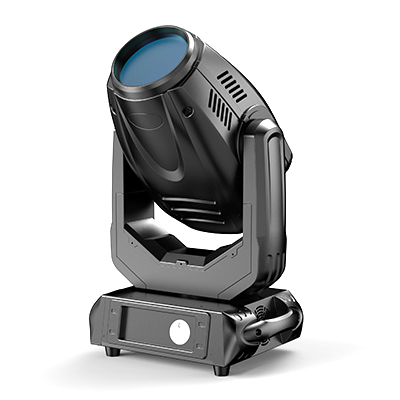
Outdoor stages are exposed to wind. Outdoor moving heads are built with reinforced mechanical structure: sturdy base to lower gravity center, high-torque motors to keep accurate pan and tilt under wind pressure, and reliable locking structure for safe hoisting and transportation.
Conclusion
Indoor and outdoor stage lighting are designed for totally different working conditions. Indoor fixtures excel at delicate color rendering and quiet running in controlled environments. Outdoor IP65 lighting fixtures feature waterproof, dustproof, high-brightness and wind-resistant performance to cope with variable weather.
Matching lighting fixtures to your venue environment is the foundation of stable live visual effects. Improper fixture selection may lead to unstable performance and potential safety risks.
XMLITE provides both indoor stage moving heads and IP65 waterproof outdoor stage lights. Our technical team can offer professional lighting configuration suggestions according to your venue and creative demands. Contact us to get detailed product specifications and customized lighting solutions for your upcoming projects.